On October 31 your front door opens dozens of times in a few hours, usually with a stranger in a mask on the other side. That one fact explains most of what goes wrong for dogs on Halloween. The candy bowl and the costume get the headlines, but the vets who deal with the aftermath keep coming back to the door. Here is what Halloween dog safety looks like when you plan it around how the night actually goes.
Why Halloween Dog Safety Starts at the Front Door
Ask the Purdue University College of Veterinary Medicine why pets go missing on Halloween and the answer is blunt: opening the door over and over to hand out candy makes escapes more likely. Dr. Candace Croney, director of Purdue's Center for Animal Welfare Science, and her team note that constant doorbells and strangers knocking are startling, and a panicked dog often bolts through the nearest opening.
You will read that Halloween is the second-worst holiday for lost pets after July 4. Be careful with that line. Shelter Animals Count, which pulls data from thousands of U.S. shelters, found the three biggest stray-dog intake days of 2025 were the day after Memorial Day, the Tuesday after July 4, and January 2. Halloween did not make the list. What makes it different is the mechanism: fireworks holidays lose dogs over back fences, while Halloween loses them through the door you are holding open, into a dark street full of running children and cars.
That is how Bundy, a family dog in Round Rock, Texas, spent nearly three weeks on his own after slipping out on Halloween. When an animal control officer found him on a highway overpass and tried to approach, he jumped about 100 feet. He survived with bruising, and a registered microchip got him home, according to the Round Rock Police Department via the AKC.
The Sanctuary Room and the Porch Chair
Purdue's team recommends a sanctuary before the first doorbell: a familiar room away from the front door with a bed, water, something to chew, and the door closed. A baby gate in the hallway adds a second barrier, and Banfield suggests leashing your dog for bathroom breaks even in a fenced yard, because a stressed dog will test a fence they normally ignore.
The cleverest advice is the simplest. Put a chair on the porch and hand out candy from there, so the bell never rings and the door never opens. If you stay inside, silence the doorbell or tape a note asking visitors not to knock. Continuous barking, whining, a lowered body, or a tucked tail mean the party is over for your dog. The AVMA adds that any dog wary of strangers belongs away from the door all evening.
Halloween Candy: What Actually Sends Dogs to the ER
Dr. Renee Schmid, director of veterinary medicine at Pet Poison Helpline, says calls jump sharply every Halloween, most of them pets eating candy or decorations. Chocolate is the helpline's number one call year-round, and the majority involve dogs. The darker the bar, the more theobromine it carries; signs run from vomiting and restlessness to a racing heart and, in bad cases, seizures.
Three other hazards matter more than owners expect. Sugar-free candy and gum sweetened with xylitol can be life-threatening, the AVMA warns, and you cannot tell by looking. Small boxes of raisins, handed out as the healthy option, can cause kidney failure. And a dog does not unwrap candy: foil and cellophane can cause a bowel obstruction that needs surgery.
Keep the bowl on a high counter or in the fridge. If your dog gets into the haul, call your vet, Pet Poison Helpline at (855) 764-7661, or ASPCA Animal Poison Control at (888) 426-4435 before symptoms start, as with any suspected poisoning.
Costumes: The Rule Most Owners Skip
Purdue's behaviour team would rather you skip the costume entirely. Most dogs find clothing stressful, and an oversized outfit can snag on shrubs and trap a frightened dog. Their alternative is a festive bandana or holiday collar. If you do dress up your dog, the AVMA's rules are simple: it fits, it does not block sight, hearing, breathing, mouth, or movement, it has no small pieces to chew off, and you never leave a costumed dog unsupervised.
One check almost nobody makes: does the costume cover the collar? A tag hidden under a cape is invisible to the parent who finds your dog on the next street.
Halloween Dog Safety Checklist: ID Before the First Doorbell
The AVMA's short list is microchip, collar, and ID tag, all current. Purdue says to check the microchip registration before the 31st, because a chip pointed at an old phone number cannot call you. Banfield cites ASPCA figures that about 85% of lost dogs and cats make it home, and the fastest reunions skip the shelter entirely.
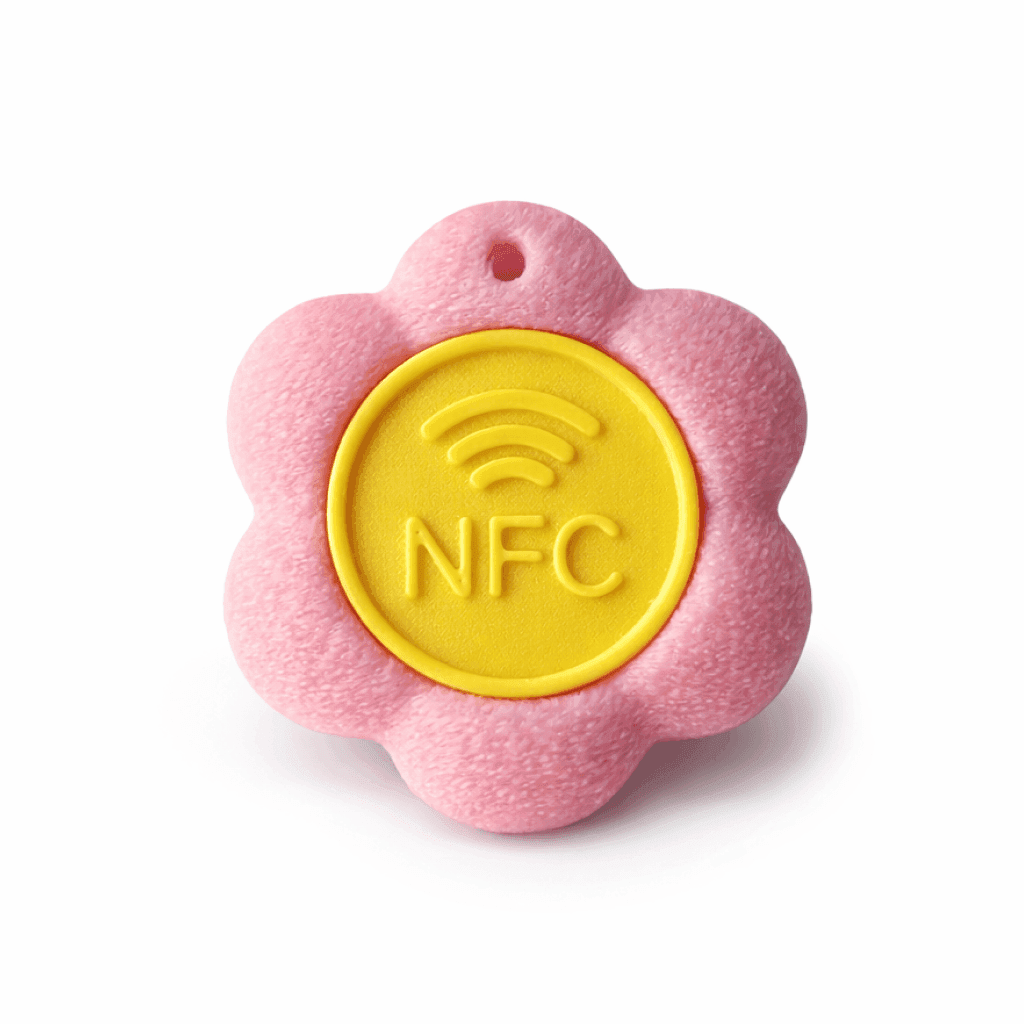
On Halloween, the person who finds your dog is almost certainly a parent with a phone in one hand and a candy bag in the other. A Bloomtag on the collar means they tap it with that phone, your contact page opens, and you get a call while you are still pacing the block. No scanner, no app, no squinting at worn engraving under a porch light.
The Bottom Line
Halloween dog safety is mostly door safety. Set up the sanctuary room, hand out candy from the porch, keep the bowl high and the costume simple, and make sure the ID on your dog's collar can reach you before the first trick-or-treater arrives.
If the tag still shows an old number, fix that this month. Get a Bloomtag: a flower-shaped NFC tag that opens your contact page with one tap of any smartphone. $24.99 one-time, no subscription ever, free worldwide shipping.
This article was written with AI assistance and reviewed for accuracy against authoritative sources, including the American Veterinary Medical Association, Pet Poison Helpline (Dr. Renee Schmid, DVM), Purdue University College of Veterinary Medicine (Dr. Candace Croney and the Croney Research Group), Shelter Animals Count, Banfield Pet Hospital, and a Round Rock Police Department case reported by the American Kennel Club. It is general guidance, not a substitute for advice from your veterinarian or an animal poison control line.