A dog slipping out of their collar is one of those moments every owner dreads. One second you're walking down the sidewalk, the next your dog is loose, the collar is in your hand, and your heart is in your throat. It happens more than people think — to nervous rescues, to strong pullers, to small dogs with narrow heads, and to perfectly trained dogs who got spooked at the wrong moment. Understanding why dogs slip out of collars is the first step to making sure yours doesn't, and to making sure they get home fast if they do.
Why Dogs Slip Out of Collars in the First Place
Most collar escapes come down to one of three things: fit, fear, or anatomy. A collar that's too loose is the obvious culprit — if you can fit more than two fingers under it, your dog can probably back out of it. But even a "correctly" fitted flat collar can fail when a dog panics. When a frightened dog plants their feet and pulls backward, their head naturally narrows toward the neck, and the collar slides right off over the ears.
Anatomy plays a huge role too. Sighthounds like Greyhounds, Whippets, and Italian Greyhounds have heads that are narrower than their necks — exactly the wrong shape for a standard buckle collar. Many small breeds, puppies still growing into their gear, and dogs with thick double coats also tend to back out of collars more easily than owners expect.
The Most Common Triggers
Even a well-fitted collar can fail in the wrong moment. The triggers tend to be predictable:
- Loud, sudden noises — fireworks, construction, a car backfire, a slamming door.
- Reactive moments — another dog, a squirrel, a delivery driver, a child running.
- Vet visits and grooming — high-stress environments where dogs are already on edge.
- Transitions — being lifted into a car, stepping out of a crate, a leash hand-off.
- New environments — a recent move, a vacation rental, a friend's yard.
If your dog has slipped out once, they're more likely to do it again. Dogs remember what worked.
Gear That Actually Prevents Escapes
The single biggest upgrade most owners can make is switching from a flat collar to a martingale collar for walks. Martingales tighten just enough to prevent slipping when a dog pulls back, but they don't choke. They were originally designed for sighthounds and are now standard advice for any dog with escape tendencies.
For dogs who panic hard or have a real flight history, a well-fitted Y-front harness is even better. It distributes pressure across the chest rather than the neck, and a properly sized harness with a back clip and a belly strap is genuinely difficult to back out of. For maximum security, some owners use a double-leash setup: one leash on the harness, a backup on a martingale, so if one fails, the other holds.
A quick fit check: with a flat or martingale, you should be able to slide two fingers (not three) underneath. With a harness, you shouldn't be able to pull the chest piece up over the dog's shoulder. Re-check the fit every season — coats change, dogs gain or lose weight, and gear stretches.
Make Sure ID Catches Them If Gear Fails
Even the best gear can fail. A collar can slip, a buckle can break, a harness strap can wear through. That's why your dog's ID needs to do its job in the worst-case scenario, not just the everyday one.
Engraved tags fade — within a year or two, the phone number you can't quite read is the same as no number at all. Paper-insert tags get soaked. Microchips work, but only if someone catches your dog and brings them to a vet or shelter with a scanner.
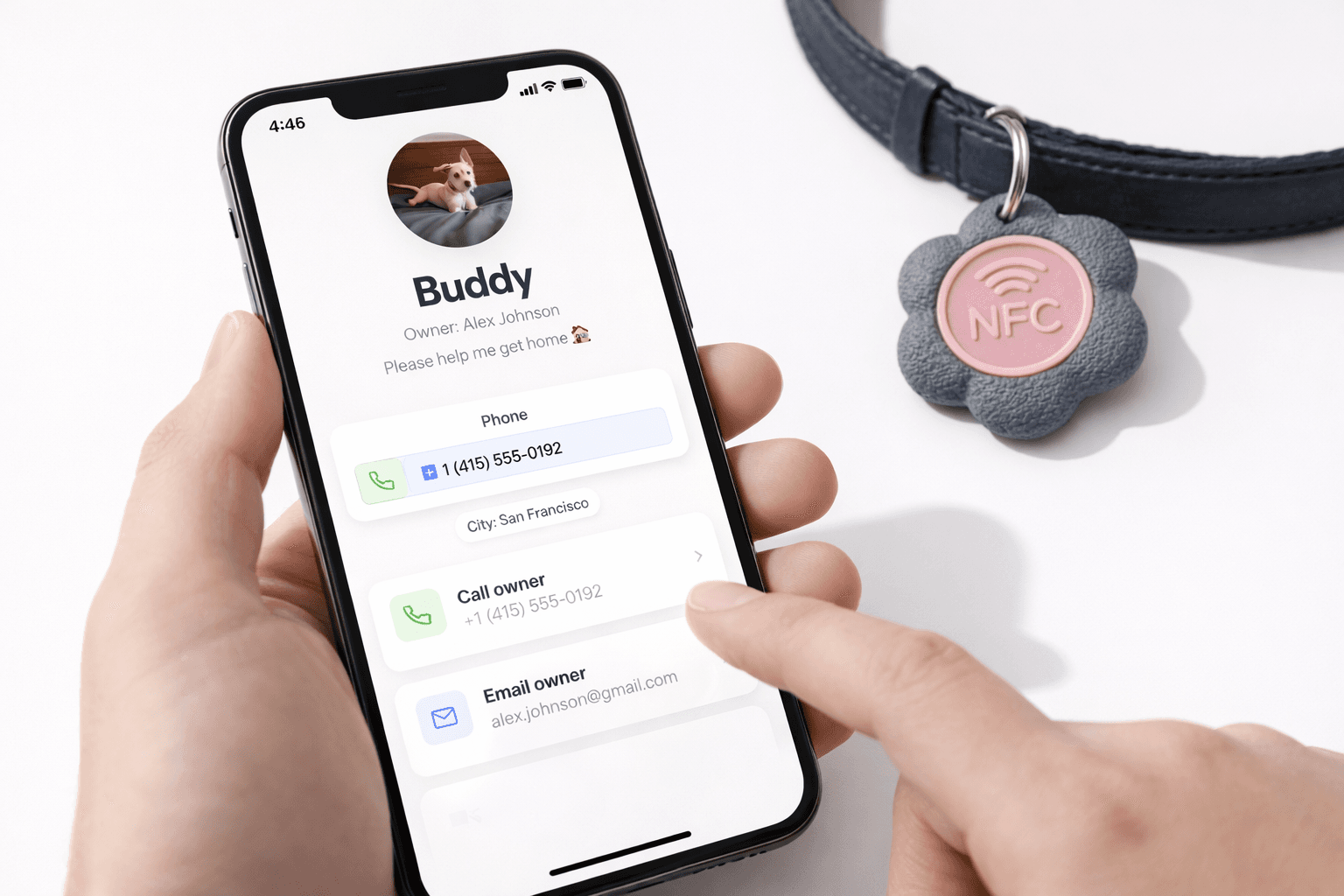
A modern NFC pet tag closes that gap. Bloomtag is a flower-shaped NFC tag that any passerby can tap with any smartphone — no app, no scanner — to instantly see your contact info and bring your dog home. It's $24.99 once, no subscription, and the info on it is updatable from your phone if you move or change numbers. Pair that with a martingale or properly fitted harness, and you've covered both prevention and recovery.
What to Do the Moment Your Dog Slips
If it happens, don't chase. Running toward a panicked dog usually pushes them further away. Instead: drop low, turn sideways, open your arms, and use a calm, high-pitched voice. Many dogs will circle back if they don't feel pursued. Have treats or a favorite toy ready if you can. If they bolt out of sight, post immediately to local lost-pet groups and your neighborhood app, and call your microchip registry — speed matters more than anything else in the first hour.
Keep Your Dog Secure and Easy to Find
Slip-outs happen, but they're mostly preventable. Upgrade to a martingale or Y-harness, check the fit every season, watch for high-risk moments, and make sure the ID on your dog's collar would actually do its job if a stranger found them tomorrow.
If your dog's tag is faded, jingly, or carries an old phone number, now is the time to fix it. Get a Bloomtag NFC pet tag — five flower colors, free worldwide shipping, and one tap brings your dog home.