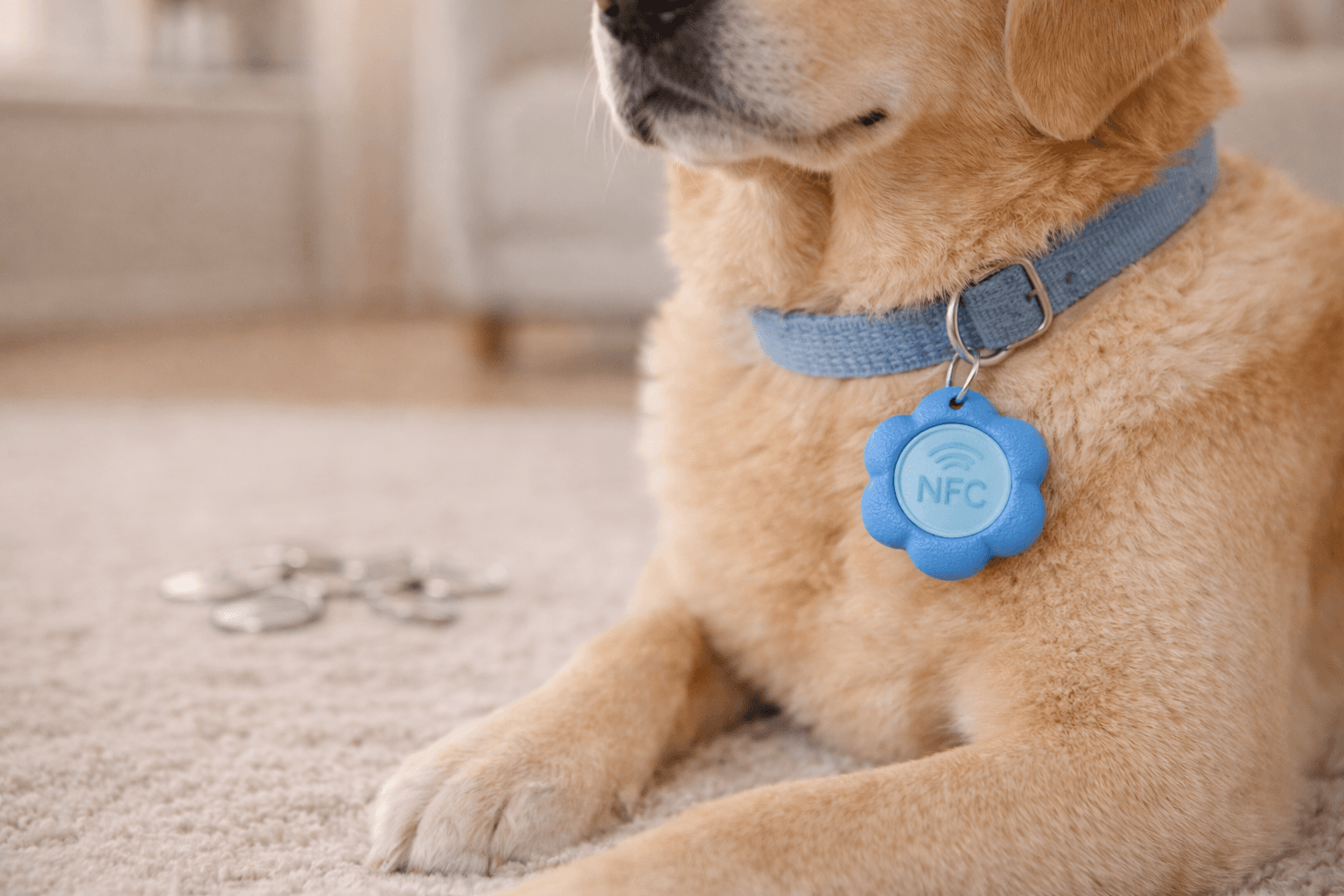
A dog ID tag is one of the simplest and most effective ways to get a lost pet home. But when you're staring at that tiny piece of metal (or flower-shaped NFC tag), figuring out exactly what to engrave can feel surprisingly tricky. Too much information won't fit. Too little and a finder might not be able to reach you.
Here's a practical breakdown of what to put on your dog's ID tag so the right person can contact you fast.
The One Thing Every Dog Tag Must Have: Your Phone Number
If you remember nothing else from this article, remember this — your phone number is the single most important piece of information on any dog tag. Use the number you're most likely to answer at any hour, which for most people is a cell phone.
If space allows, consider adding a second contact number. A partner, family member, or close friend who knows your dog can serve as a backup if you miss the call. Just make sure you have their permission first.
A phone number gets results faster than any other detail because it creates an instant, direct connection between the finder and you.
Should You Put Your Dog's Name on the Tag?
This is one of the most debated questions among dog owners. Including your dog's name makes it easier for a stranger to calm your pet down — dogs respond better when someone uses their name, which can prevent them from bolting further.
On the other hand, some owners worry that a stranger could use the name to lure their dog. In practice, this risk is extremely low. A frightened lost dog is far more likely to be helped by someone who can call them by name than to be targeted by a bad actor.
Our recommendation: include the name if you have space. The safety benefit outweighs the theoretical risk.
What Else to Include (If You Have Room)
Most traditional engraved tags give you two to four lines of text, so you need to prioritize. After your phone number, consider these options in order of importance:
Your city or zip code. A full street address isn't necessary and can raise privacy concerns. A city name or zip code gives a finder enough geographic context to know whether your dog is close to home or far away.
A medical alert. If your dog takes daily medication, has diabetes, epilepsy, or severe allergies, a short note like "NEEDS MEDS" or "DIABETIC" can be genuinely life-saving. This tells a finder or shelter that time matters.
Microchip status. A simple "I'm microchipped" line reassures a finder that a vet or shelter can scan your dog and pull up your full contact details. You don't need to engrave the microchip number itself — it's stored in the chip.
A second phone number. As mentioned above, a backup contact doubles your chances of a quick reunion.
What to Leave Off the Tag
Just as important as what goes on the tag is what doesn't belong there. Skip your dog's breed — a finder doesn't need it and it wastes precious space. Leave off your full home address unless you're comfortable with strangers knowing where you live. And avoid novelty phrases like "Call my mom" — cute, but they eat up a line you could use for an actual phone number.
Also skip your own name. It doesn't help a finder contact you any faster, and your phone number does all the heavy lifting.
Why Smart Tags Give You More Room to Share
Traditional engraved tags force you to pick and choose what fits on a few tiny lines. That's where smart NFC tags change the game. With a tag like Bloomtag, anyone who finds your dog simply taps the tag with their phone — no app needed — and instantly sees a full contact page with your phone number, address, medical notes, backup contacts, and anything else you want to share.
There's no character limit, no squinting at worn-down engraving, and you can update your details anytime without buying a new tag. It's all the information a finder needs, delivered in seconds.
Keep Your Dog's Tag Updated
Whatever type of tag you choose, the most common mistake is forgetting to update it. Moved to a new city? Changed your phone number? Got a new vet? Take two minutes to check your dog's tag and make sure every detail is current. An outdated phone number on a tag is almost as useless as no tag at all.
Your dog's ID tag is their voice when they can't speak for themselves. Put the right information on it, keep it current, and you'll have peace of mind every time they walk out the door. If you want a tag that never runs out of space, check out Bloomtag's NFC pet tags — one tap, all your info, no app required.