Summer sidewalks look harmless, but hot pavement is one of the most underestimated dangers to a dog's paws. On an 85°F day, asphalt can climb to 130–140°F — hot enough to cause serious burns in just minutes, and the air temperature doesn't have to feel extreme for the ground to be dangerous. The good news: protecting your dog's paws from hot pavement takes about five seconds of checking and a few small habit changes. Here's everything you need to know before your next summer walk.
The 7-Second Test (Do This Before Every Walk)
The simplest, most reliable check is the back-of-the-hand test. Press the back of your hand flat against the pavement and hold it there for seven seconds. If you can't comfortably keep it there for the full seven seconds, it's too hot for your dog's paws — full stop.
Why the back of your hand? It's more sensitive than your palm, so it gives you a more honest read on what your dog's pads will feel. Remember that your dog has no shoes and no way to tell you the ground is burning until the damage is already done.
A few numbers worth keeping in mind, according to FOUR PAWS USA: when the air is around 77°F, asphalt can already reach 125°F. At surface temperatures near 120°F, burns can happen in as little as 60 seconds. Pavement, brick, sand, and metal (like truck beds or manhole covers) all heat up faster and hold heat longer than grass.
Why Hot Pavement Is So Dangerous
A dog's paw pads are tough, but they are not fireproof. They're skin, and skin burns. Because dogs instinctively keep moving to please us — or simply to get home — many will walk on scorching pavement without protest until their pads are blistered.
The American Kennel Club notes that pad burns are a common summer emergency, and they're almost entirely preventable. Watch for these warning signs after a walk:
- Limping or refusing to walk
- Licking or chewing at the paws
- Pads that look darker than usual, red, or visibly blistered
- Missing patches of pad or raw-looking skin
If you spot any of these, it's a vet situation, not a wait-and-see one.
First Aid for a Burned Paw
If you suspect your dog has burned their pads, act quickly but calmly:
- Get your dog off the hot surface immediately — carry them to grass or shade if you can.
- Cool the paws with cool (not ice-cold) water for at least 10 minutes.
- Keep your dog from licking the area, which can worsen irritation and cause infection.
- Call your veterinarian. Burns can look minor on the surface and still need treatment, and pad injuries are prone to infection.
Burns are a medical issue, so this is one area where it's always worth a professional opinion rather than home treatment alone.
How to Keep Summer Walks Safe
Most hot-pavement injuries are avoidable with a few simple changes:
- Walk early or late. Aim for early morning or after sunset, when surfaces have had time to cool. Mid-afternoon is the danger zone.
- Stay on grass and shade. Route your walks through parks and shaded sidewalks instead of open blacktop.
- Try dog booties or paw wax. Booties take some training to accept, but they're a genuine barrier. Paw balms add a thinner layer of protection and help condition dry pads.
- Toughen up gradually. Pads that have built up over a season of regular walking handle heat better than soft, under-exercised pads — but conditioning is never a substitute for the 7-second test.
- Keep walks short on hot days. When in doubt, swap the walk for indoor play or a sniffy game in the yard.
Don't Forget ID on Summer Walks
Here's a connection people miss: hot pavement and lost dogs go hand in hand in summer. A startled dog — a passing car, a firework, a loose dog — may bolt onto a busy road, and once they're running on burning asphalt, panic builds fast. Summer is peak season for both paw injuries and runaway dogs, which is exactly why an up-to-date ID tag matters most in these months.
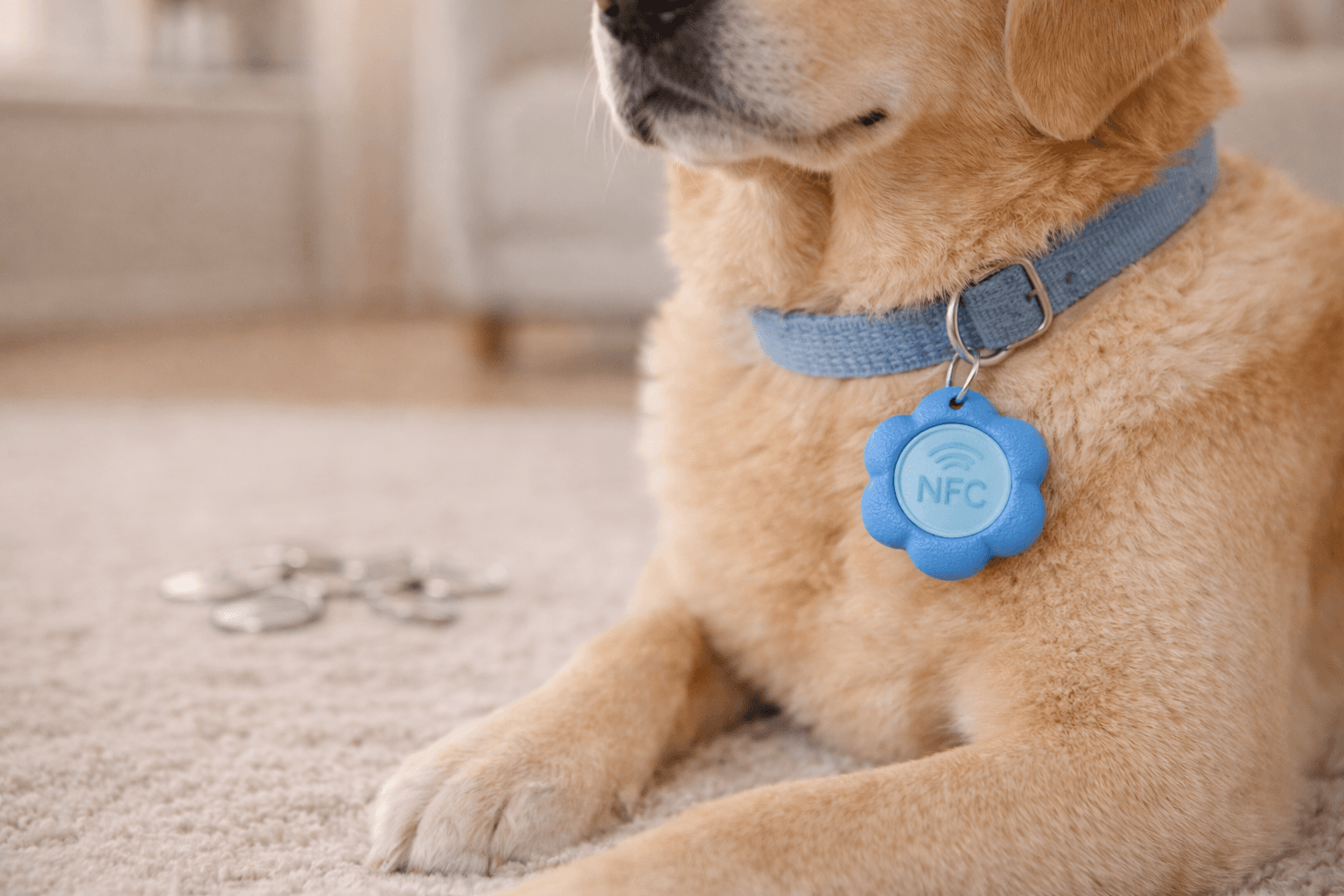
Make sure whoever finds your dog can reach you in seconds. A smart NFC tag like Bloomtag lets any passerby tap it with a smartphone — no app, no scanner — and instantly see your contact details. You can update your phone number or add a note like "anxious, please call" without re-engraving anything, which is handy when summer plans and pet sitters change week to week.
The Bottom Line
Protecting your dog's paws from hot pavement comes down to one habit: the 7-second test before you step off the curb. Pair that with cooler walk times, shaded routes, and a quick check of your dog's ID, and you'll get through the whole summer without a single trip to the emergency vet.
Getting ready for summer walks? Grab a Bloomtag smart NFC pet tag — $24.99, one-time purchase, no subscription, with free worldwide shipping. Tap it, and your phone rings. It's the simplest way to make sure a hot-weather scare doesn't turn into a lost-dog night.
Sources: American Kennel Club, FOUR PAWS USA. This article is informational and not a substitute for veterinary advice; it was drafted with AI assistance and reviewed before publishing.