Hiring a pet sitter feels like handing someone the keys to your kingdom — except your kingdom barks, sheds, and occasionally tries to dig under the fence. Whether you're flying out for a long weekend or heading to a wedding two states over, a thorough pet sitter checklist for dog owners is the single best way to keep your dog safe while you're away.
The hard truth: most dogs that go missing in 2026 don't escape from their own home. They escape on day three of a sit, when a sitter doesn't realize the back gate's latch is loose, or doesn't know your dog is a flight risk during fireworks. A good handoff fixes that in five minutes.
Below is the pet sitter checklist for dog owners we wish every household used — printable, practical, and built around the moments that actually go wrong.
Emergency contact info (put this on the fridge)
Your sitter should never have to scroll through their phone in a panic. Tape a one-page sheet somewhere obvious — fridge, kitchen counter, dog food bin — with:
- Your full name and cell number (plus a backup, like a partner or parent)
- The address you're staying at and your return date
- Your vet's name, address, and after-hours number
- The nearest 24/7 emergency animal hospital
- Your dog's microchip number and registry login (or a note that ID is "on the tag")
- Local animal control and the closest shelter's number
- A trusted neighbor or friend who can show up in 15 minutes if needed
If your dog gets out, every minute counts. Hunting for a vet's number on Google is the worst time to learn your dog's full medical history.
Feeding, meds, and routine
Sitters aren't mind readers. Write down exactly:
- How much food per meal, what brand, and where it's stored
- Treat rules (and what's off-limits — chocolate, grapes, the cat's food)
- Medication names, dosages, times, and how your dog takes them (in a pill pocket, hidden in cheese, etc.)
- Walk schedule and typical route
- Bathroom habits — how often, any quirks, signals your dog gives
- Sleep setup and any bedtime routine
If your dog has anxiety, allergies, or a sensitive stomach, write that at the top in bold. A sitter who feeds the wrong treat once is a sitter who calls you crying at 11 p.m.
ID tags and microchip — the lost-dog insurance policy
This is where most pet sitter checklists fall short. Even the best sitter will lose grip on a leash if a deer crosses the trail. Your dog's collar is the only thing standing between "scared and wandering" and "scared, wandering, and untraceable."
Before you hand off the dog, check three things:
- Collar fit — two fingers under the collar, no more. A loose collar is a slipped collar.
- ID tag is current — your phone number, ideally a backup number, and the dog's name. If you've moved, switched phones, or had a baby in the last year, double-check.
- Microchip is registered to the right number — a chip linked to a phone you don't use is worse than no chip at all.
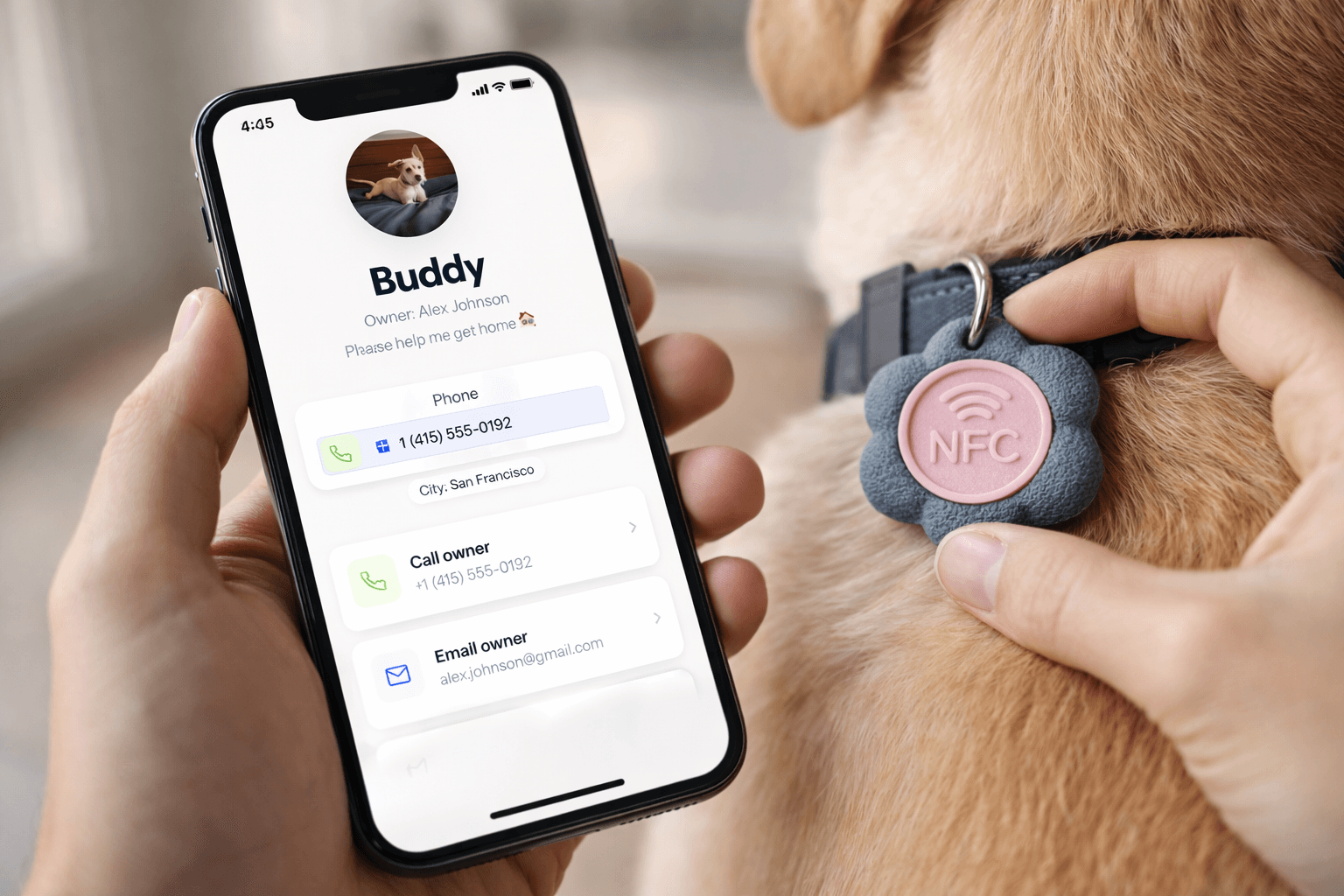
This is a moment a Bloomtag NFC pet tag earns its keep. A sitter doesn't need to know your phone number — anyone who finds your dog taps the flower-shaped tag with their phone, your contact page opens, and they can call or text you instantly. No app, no engraving to wear off, no stranger squinting at a tiny phone number on the back of a tag. One tap, dog comes home.
Bloomtag is $24.99, one-time, no subscription, and ships free worldwide in five colors — Blossom, Buttercup, Cornflower, Sakura, and Storm. If your dog is going on a sit, it's worth having on the collar.
House and yard rules
Walk the sitter through the physical environment — don't assume. Show them which doors and gates your dog tries to bolt through, any windows or balconies that aren't escape-proof, weak spots in the fence, and where the leash, harness, and spare collar live. If your dog is a known escape artist, say it twice. "She has slipped out of the back gate before" is the kind of warning that prevents a 2 a.m. text.
Behavior, triggers, and "if-this-then-that"
Every dog has a quirk. List yours: how they handle strangers and other dogs, what scares them (fireworks, thunder, the vacuum), any reactivity or separation anxiety, what calms them, and how reliable their recall is off-leash. Frame it as "if X happens, do Y." Sitters love specifics — it takes the guesswork out and protects your dog when you're unreachable.
What to do if your dog gets out
Even with the best handoff, accidents happen. Tell your sitter, in writing, exactly what to do if your dog goes missing: call you immediately, walk the neighborhood calling the dog's name, post in local lost-pet groups, and call the nearest shelter and animal control. If you have an NFC tag on the collar, remind them — anyone who finds the dog can reach you in one tap, even if the sitter is out searching.
Make the handoff bulletproof
Before your next trip, give your dog the easiest possible way home: a Bloomtag NFC pet tag. One tap, instant contact, no app, no subscription. Order yours at shop.bloomtag.me — free worldwide shipping, one-time $24.99, five colors to match your dog. Travel with peace of mind, and let your sitter focus on belly rubs instead of phone trees.