Letting your dog run free is one of the best things you can give them — full-speed sprints, real sniffing time, the kind of joy that no leashed walk can match. But off-leash dog safety isn't just about whether your dog will come back. It's about what happens in the few seconds when they don't. A squirrel, a deer, an open gate, a passing bike — and suddenly your dog is half a mile away in a direction you can't see.
This guide covers when off-leash is actually safe, how to prepare your dog (and yourself) before unclipping, and the small piece of equipment that turns a worst-case scenario into a quick reunion.
When off-leash is actually safe
Not every dog is an off-leash dog, and not every place is an off-leash place. Be honest with both.
Off-leash is reasonable when all of these are true: the area is legally off-leash or genuinely remote, your dog has rock-solid recall under distraction, there are no roads within sprinting distance, you can see far enough ahead to spot triggers (other dogs, wildlife, kids on bikes), and your dog is wearing visible ID. If any one of those is missing, keep the leash on or use a long line instead.
Off-leash is not safe in unfenced parks near roads, on trails during hunting season without bright gear, anywhere your dog has bolted before, or with a recently adopted dog you don't fully know yet. New dogs need months, not days, before they're ready.
Build recall before you need it
Recall is the single skill that decides whether off-leash dog safety works for your dog or fails the first time something interesting moves. The good news: it's trainable at any age.
Start in a boring environment with a long line attached. Say your cue word once — pick something you don't already use ("here," "come," or a whistle), not your dog's name on its own. The moment they turn toward you, mark it ("yes!") and pay with something genuinely high-value: chicken, cheese, hot dog. Not kibble. Recall pay has to beat squirrels.
Practice for two minutes, ten times a day. Add distance, then distractions, then new locations — but only one variable at a time. A dog with great recall in your kitchen is not a dog with great recall at the trailhead. Keep the long line on for weeks longer than you think you need to.
Never punish a dog who comes back slowly. The cost of poisoning the cue is enormous: a dog who's been scolded for a slow recall learns it's safer to stay away. Always pay, every time, for as long as you both live.
What to wear off-leash
Off-leash gear is about being seen and being identified if things go sideways.
Wear a brightly colored harness or vest, especially in fall and winter. A bell is helpful for wildlife awareness. A long line (15–30 feet) is the single best training tool ever invented — it gives your dog freedom while keeping a safety net in your hand.
And this is the part most owners skip: a working ID tag with up-to-date contact info. Engraved tags wear smooth in two years. Paper inserts get wet and unreadable. If your dog ends up two miles away and a stranger picks them up, the only thing standing between "home in an hour" and "five days at a shelter" is what's on that tag.
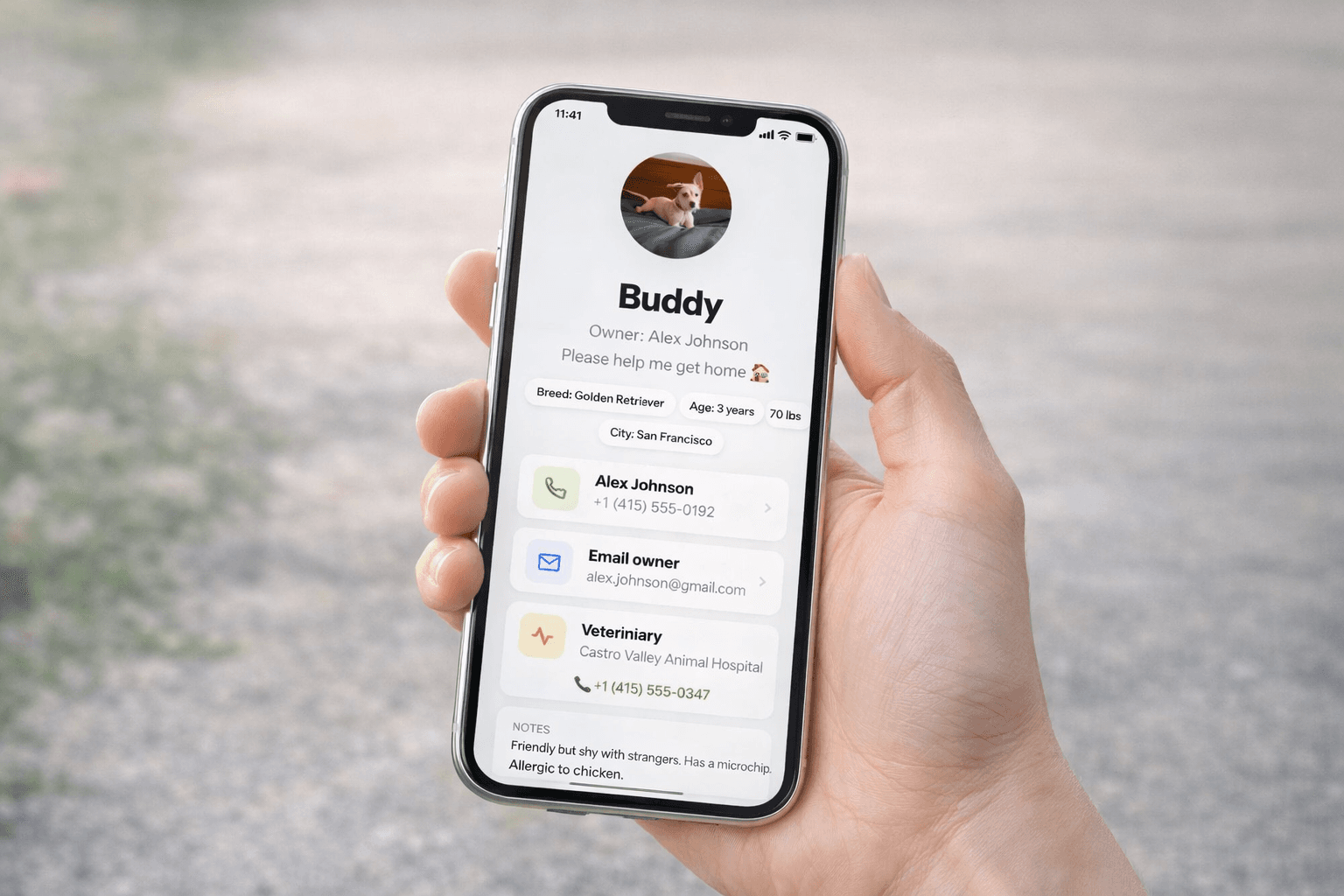
A modern NFC pet tag like Bloomtag fixes this: anyone with a smartphone — any iPhone or Android made in the last decade — can tap the flower-shaped tag and instantly see your name, phone, address, vet, and any medical notes. No app, no scanner, no engraving to wear off. You update the info from your phone whenever you move or change numbers. One-time $24.99, free worldwide shipping, no subscription.
The "what if they bolt" plan
Even great recall fails sometimes. Plan for it.
Know your area: where would a panicked dog likely run? Toward home? Toward water? Toward the parking lot? Mentally rehearse which direction you'd cover first. If your dog disappears, do not chase — running toward a panicked dog often pushes them further. Instead, kneel down, turn sideways, and call calmly. Many dogs who won't come on a normal cue will come back to a kneeling, non-threatening human.
Carry your phone with location services on. Have your vet, microchip company login, and local lost-pet Facebook group bookmarked. If your dog has been gone more than 30 minutes, post immediately — speed matters more than a polished post.
Build the routine
Off-leash dog safety isn't a one-time decision; it's a routine. Before every off-leash session, run a quick mental check: legal area, recall practiced this week, ID tag readable, long line in the bag if needed, weather and wildlife reasonable. Skip any of those and clip the leash back on. There's no failure in choosing leashed today — only in unclipping when you weren't ready.
Make sure your dog can always get home
Recall works most of the time. ID works every time. Before your next off-leash walk, make sure the tag on your dog's collar will actually do its job if something goes wrong.
Order a Bloomtag NFC pet tag for $24.99 → — five flower colors, instant tap-to-contact on any smartphone, no app or subscription, free worldwide shipping. Update your info from your phone any time. Because the best off-leash adventure is the one your dog comes home from.