If your dog walks past you and it sounds like a tambourine section, you're not alone. The constant jingling of metal ID tags is one of the most common complaints from dog owners — it wakes the baby, drives you up the wall during work calls, and over time can even bother your dog. The good news: in 2026 there are several easy ways to stop dog tags from jingling without giving up the safety of having ID on your dog at all times.
This guide walks through why dog tags jingle, what actually works to silence them, and what to avoid.
Why Dog Tags Jingle in the First Place
Most dogs wear two or three small metal tags on a single split ring: a rabies tag, a license tag, and an engraved ID tag. Every step your dog takes, those tags clink against each other and against the metal D-ring on the collar. The more tags, the louder it gets. Larger, bouncier dogs amplify the problem.
The fix is almost always one of three things: reduce the number of tags, separate the tags so they don't touch, or replace the tag setup entirely with something quieter.
Quick Fixes That Actually Work
Before buying anything new, try these:
Use a tag silencer or rubber tag bumper. These are flexible silicone covers that wrap around the edge of each tag. They cost a few dollars and muffle most of the noise. Look for ones that fully enclose the tag's edge, not just clip on top.
Wrap each tag with electrical tape or a thin layer of duct tape. Less elegant, but free. Cover the metal edges where tags hit each other and the D-ring. Replace every couple of months as the tape wears.
Put each tag on its own split ring. A surprising amount of jingle comes from tags rubbing each other on a single ring. Spread them out and the noise drops noticeably.
Slide tags onto a tag pocket or tag holder. These are small fabric pouches or rubber sleeves that hold all your dog's tags inside one quiet container that attaches to the collar. Effective, though they can wear through over time.
These tricks help, but none of them solve the root problem: you still have multiple tags banging around.
The Real Solution: Fewer Tags
The quietest dog is one wearing a single, well-designed tag. If your dog has three jingling discs, ask yourself which ones you can consolidate.
Your rabies tag is required by law in most areas, but the proof is the tag certificate, not the tag itself — many vets are fine with you keeping the tag at home as long as you can show vaccination records. Your municipal license tag may have similar rules. Check locally.
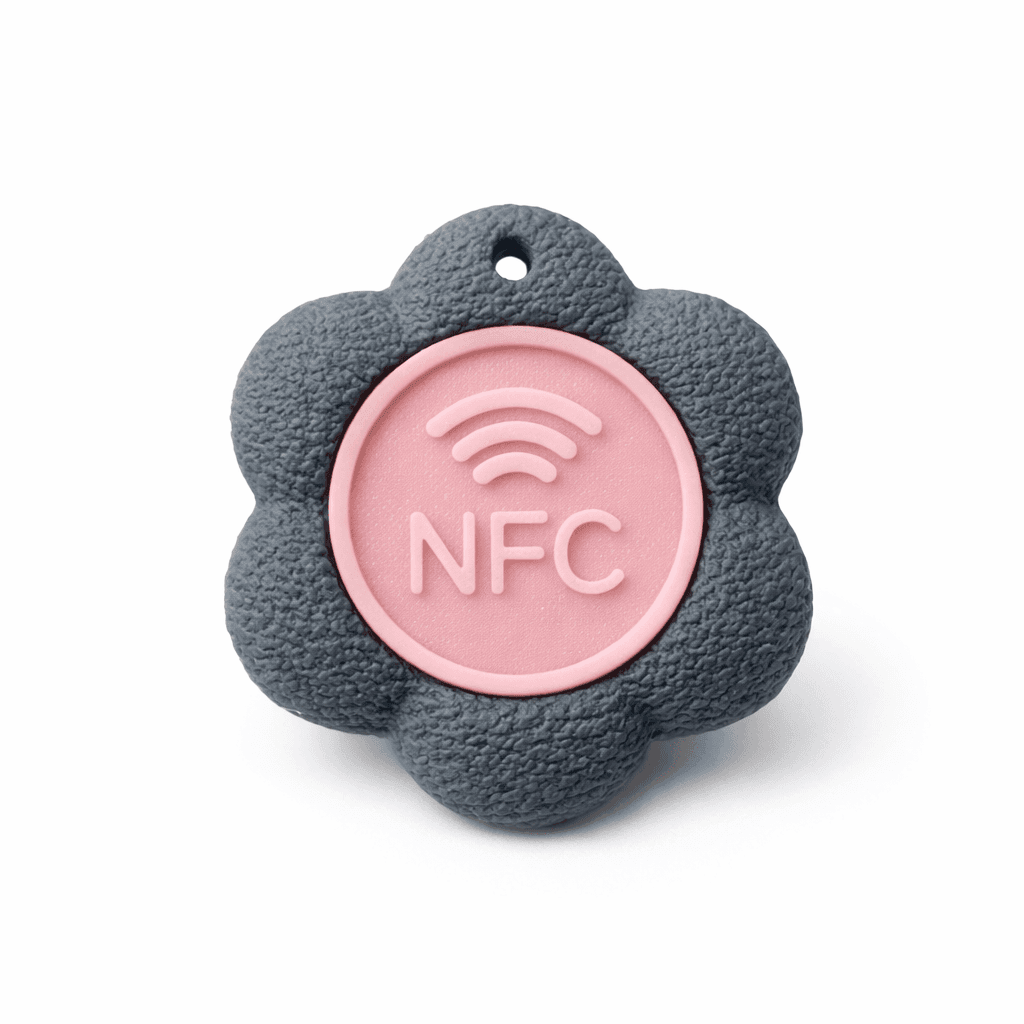
For the actual ID tag — the one with your phone number — you don't need engraving at all in 2026. A modern NFC pet tag can hold your full contact info, vet details, medications, and even a photo of your dog, all on a single durable tag that anyone with a smartphone can read in seconds. One tag instead of three. No jingle. No re-engraving when you move.
Bloomtag is one example: a flower-shaped NFC tag that taps to any smartphone and instantly opens your contact page — no app, no subscription. Because it's one tag instead of three, the jingling problem largely disappears.
What to Avoid
A few "fixes" cause more problems than they solve:
Removing the tag entirely. This is the worst option. A silent dog with no ID is just a lost dog waiting to happen. If your dog ever slips out the door, you want a stranger to be able to identify them in seconds.
Tucking the tag inside the collar. Some owners thread the tag under the collar webbing. It's quiet, but the tag is now invisible — defeating the whole point of an ID tag.
Using a soft cloth collar with embroidered phone number only. Embroidered collars look nice and are silent, but they're hard to read at a distance, the thread fades within a year, and most lost-dog flyers and vet offices expect a hanging tag.
The goal is silence and safety. Don't trade one for the other.
Choosing the Right Quiet Tag Setup
If you want the quietest, most reliable setup possible:
- Replace your engraved ID tag with a single smart NFC tag that holds all your info digitally.
- Keep your rabies tag at home (if local law allows) or use a tag silencer on it.
- Use a single split ring with one tag on it, attached cleanly to the collar's D-ring.
That's it. One tag, no clinking, full ID coverage, and your contact info is updateable from your phone whenever you move or change numbers.
A Quieter Walk Starts With One Tag
The fastest way to stop dog tags from jingling isn't a piece of tape or a silicone cover — it's getting down to a single tag. If you're ready for a quieter house and a smarter ID setup, check out Bloomtag. It's a one-time $24.99 purchase, no subscription, free worldwide shipping, and comes in five colors so it works with any collar. Your dog stays safe, your home stays quiet, and you never have to re-engrave again.