Most of us worry about our dog slipping a leash or bolting through an open gate. Fewer of us think about the other way a dog can disappear: someone simply takes them. Dognapping is rare compared to dogs that wander off, but it does happen — usually to friendly, valuable, or easy-to-grab dogs in ordinary moments like a quick stop outside a coffee shop. The good news is that solid dog theft prevention comes down to a handful of habits, plus making sure that if the worst happens, your dog is easy to get back. Here's how to do both.
How Common Is Dog Theft, Really?
It's worth being honest: the odds that your specific dog is targeted on any given day are low. The much larger risk is still a dog escaping on their own. But thieves do look for patterns. According to the American Kennel Club, purebred and small "grab-and-go" dogs are the most common targets, often taken to be resold or, in some cases, used for breeding. Knowing that helps you focus your effort where it counts rather than living in fear.
Dog Theft Prevention Starts at Home
Plenty of dogs are taken from their own property, not the street. A few changes make your yard a much harder target:
- Lock your gates. A simple padlock or latch on fence gates stops the easiest opportunistic grab.
- Don't leave your dog out unsupervised. Especially in an unfenced or street-facing yard. When you're home, go out with them rather than letting them roam alone for long stretches.
- Secure the doggie door. AKC notes that some dogs are coaxed out through an accessible doggie door when no one's home. Close or lock it when you're away.
- Add a camera. Visible doorbell or yard cameras both deter thieves and give police something to work with if anything happens.
Dog Theft Prevention on Walks and Errands
The classic dognapping scenario is a dog tied up outside a store. The fix is just as simple — don't do it.
- Never tie your dog up outside a shop, and never leave them alone in a parked car. Both are open invitations.
- Keep them leashed in public. An off-leash dog wandering toward a stranger is far easier to lead away.
- Stay aware. Skip the noise-cancelling headphones on solo walks so you can hear someone approaching, and keep your phone on you.
- Don't overshare. Be a little guarded about how much you paid for your dog, your daily route, and the times you walk. Thieves who target high-value dogs often do a little homework first.
None of this requires paranoia — just the same situational awareness you'd use with anything else valuable.
Make Your Dog Easy to Recover
Prevention reduces the odds; recovery is your safety net. A stolen dog often ends up loose again — escaping a thief, getting dumped, or being surrendered to a shelter — and at that point, identification is everything.
Two layers matter most. First, a registered microchip with current contact details. A microchip is permanent and is what shelters and vets scan for, so keep your registration up to date; an unregistered chip helps no one. Second, visible ID your dog wears all the time, because a chip can only be read by someone with a scanner.
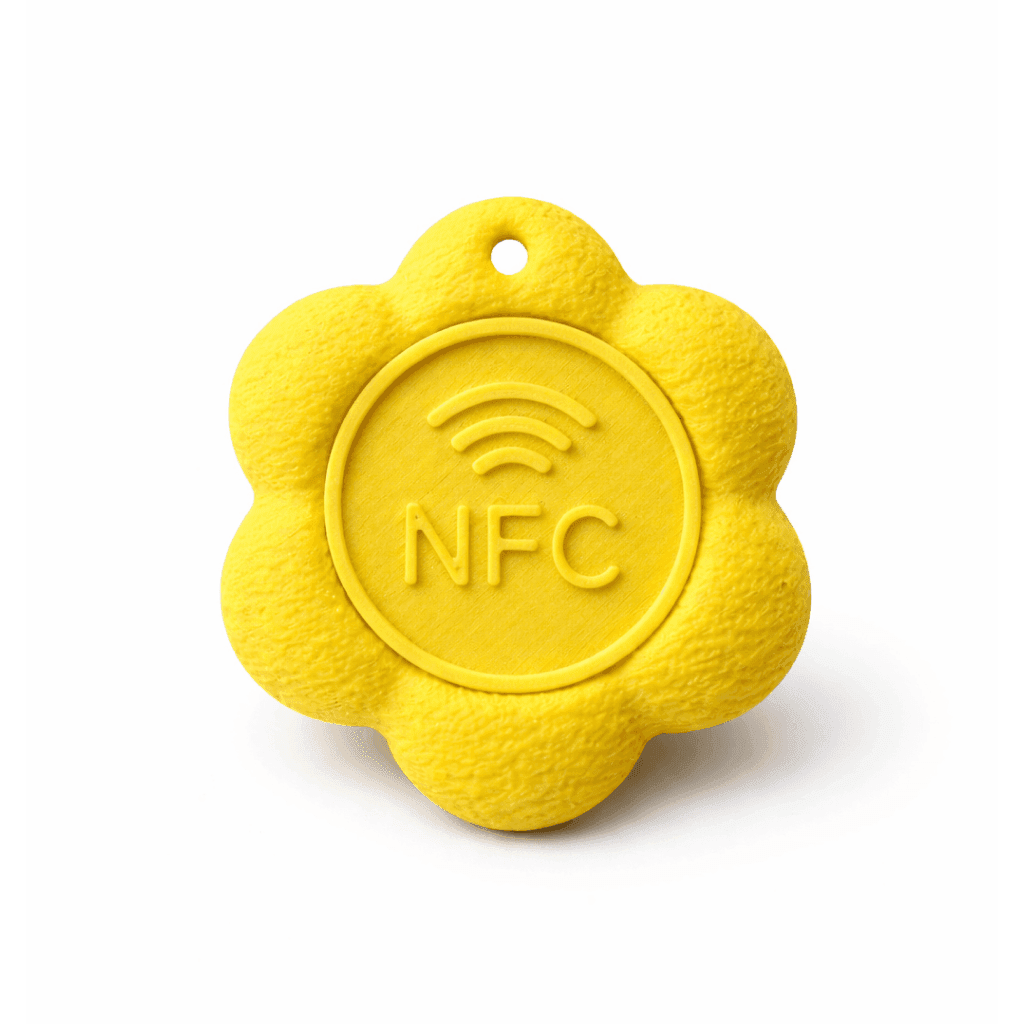
This is where a smart NFC tag like Bloomtag earns its place. A traditional engraved tag broadcasts your name and number to anyone standing close — including the wrong person. A Bloomtag carries no personal details on its surface; when a Good Samaritan taps it with any smartphone (no app needed), it opens the contact page you control. You decide what shows and can update your number, add a note, or change details instantly if your situation changes. It won't stop a determined thief, but it gives an honest finder the fastest possible path back to you.
If Your Dog Is Stolen, Act Fast
Speed matters in the first hours. The AKC recommends you immediately report the theft to police and get a report number, then contact your microchip company to flag the chip as stolen. Call and visit local shelters and vets, post on lost-and-found pet databases and neighborhood groups, and share clear photos widely. Recent vet records and registration papers help prove the dog is yours if ownership is ever questioned.
The Bottom Line
Good dog theft prevention isn't about fear — it's a few sensible habits: lock the gate, don't tie your dog up outside, stay aware on walks, and keep your dog identifiable. Do that, and you've covered both ends of the problem: making your dog a harder target, and making them easy to bring home if anything goes wrong.
Want recovery-ready ID that doesn't expose your details to strangers? Get a Bloomtag NFC pet tag — $24.99, one-time, no subscription, with free worldwide shipping. Tap it with any phone and a finder reaches you in seconds.