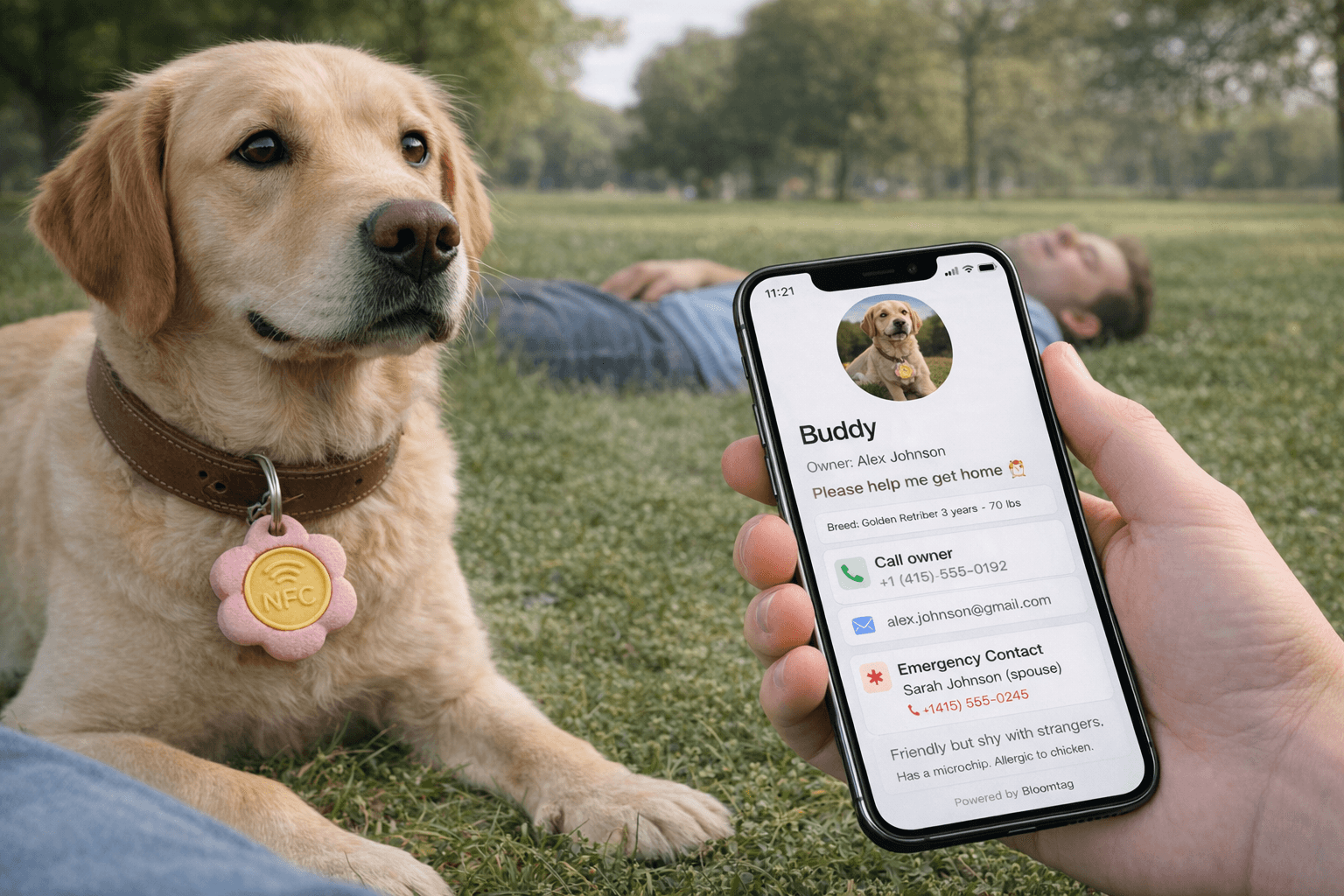
Dog parks are one of the best parts of owning a dog. Off-leash zoomies, new friends, and that blissful exhaustion on the car ride home — it doesn't get much better. But a great dog park visit takes a little preparation. These dog park safety tips will help you avoid the most common problems so every trip stays fun and stress-free.
Make Sure Your Dog's ID Is Up to Date
This one sounds obvious, but it's the mistake that causes the most heartbreak. Gates get left open, dogs squeeze through fences, and a spooked pup can bolt faster than you can react.
Before you even think about the park, check that your dog is wearing a legible, current ID tag with your phone number. Traditional engraved tags wear down over time, and if the text is too faded to read, it's no better than having no tag at all. Newer options like NFC smart tags — Bloomtag makes a popular flower-shaped one — let anyone tap their phone to instantly pull up your contact details, which means no squinting at tiny text and no outdated information if you've moved or changed your number.
A microchip is also essential, but remember: a chip only works if a vet or shelter scans it. A visible tag is what gets your dog home in the first fifteen minutes.
Know the Vaccine and Health Basics
Dog parks are shared spaces, and that means shared germs. The American Kennel Club recommends that dogs visiting parks be up to date on core vaccines and also vaccinated for bordetella, leptospirosis, and canine influenza. Flea, tick, and heartworm prevention is equally important, especially in spring and summer when parasites are at their peak.
A few ground rules to follow:
- Skip the park if your dog is sick, coughing, or has diarrhea.
- Puppies under four months who haven't completed their vaccine series should stay home.
- Spayed or neutered dogs tend to cause fewer conflicts, and many well-run parks actually require it.
If you're unsure about your dog's vaccine status, a quick call to your vet before the first visit is time well spent.
Learn to Read Body Language
Most dog park incidents don't come out of nowhere — there are usually warning signs. Learning basic canine body language helps you step in before a scuffle starts.
Watch for these red flags: hard staring, stiff posture, raised hackles, a tucked tail combined with lip licking, or one dog repeatedly pinning another. These signals mean it's time to calmly leash up and create some distance.
On the flip side, loose wiggly bodies, play bows, and taking turns chasing are all signs of healthy play. If your dog seems overwhelmed — hiding behind your legs, trying to leave, or freezing up — that's their way of saying they've had enough. Respect it. Not every dog is a dog-park dog, and that's perfectly fine.
Watch the Weather and Pack Water
Heat is the silent danger at dog parks. Dogs will play until they drop, and on warm days that can tip into heatstroke fast. Temperatures above 80°F (27°C) call for shorter visits, ideally in the early morning or after sunset.
Always bring your own water and a portable bowl. Communal water bowls can harbor bacteria and parasites like giardia. Fresh water from home is safer and more likely to actually get your dog to drink.
In cooler months, watch for icy patches and salt-treated paths that can irritate paw pads. A quick paw rinse after the visit handles most issues.
Pick the Right Park and Stay Alert
Not all dog parks are created equal. Look for parks with secure double-gated entries, separate areas for small and large dogs, and clear posted rules. A park that requires registration or proof of vaccines is usually a safer bet.
Once you're inside, put your phone away. The number-one safety tip from every trainer and vet is the simplest: watch your dog. Most problems happen when owners are distracted. Stay within a few steps of your dog, keep the leash in your hand for quick recall, and be ready to leave if the energy in the park shifts.
A Quick Pre-Visit Checklist
Before heading out, run through this list:
- Collar with a readable, current ID tag
- Leash for walking to and from the park
- Fresh water and a portable bowl
- Poop bags (always)
- Up-to-date vaccines and parasite prevention
- Basic recall training — your dog should come when called, even when distracted
Enjoy the Park, Skip the Worry
Dog parks should be fun, not stressful. A little preparation — the right vaccines, solid ID, basic body-language awareness, and a bottle of water — goes a long way. Your dog gets the exercise and socialization they need, and you get the peace of mind that comes from knowing you've covered the basics.
Ready to upgrade your dog's ID before the next park visit? Check out Bloomtag — one tap, instant contact info, no app needed.