Summer heat, long walks, and a water bowl that ran dry hours ago add up to one of the most common — and most overlooked — warm-weather problems for dogs: dehydration. The tricky part is that dog dehydration often sets in quietly, well before a dog looks obviously sick. Knowing the early signs of dehydration in dogs, plus two simple tests you can do at home, can help you catch it before it becomes an emergency.
What Causes Dog Dehydration?
Dehydration happens when a dog loses more fluid than it takes in, throwing off the balance of water and electrolytes the body needs to function. In summer the usual culprits are heat and exertion — panting, the main way dogs cool themselves, sheds a surprising amount of moisture. But dehydration isn't only a hot-weather problem. Vomiting, diarrhea, fever, refusing to drink, and underlying illness can all drain a dog's fluids quickly, and puppies, senior dogs, and small breeds dry out faster than healthy adult dogs.
Early Signs of Dehydration in Dogs
The first signs are subtle, which is exactly why they're easy to miss. According to the American Kennel Club, warning signs of dog dehydration include:
- Loss of skin elasticity — skin that's slower to spring back when gently lifted
- Dry, sticky, or tacky gums instead of the usual moist, glistening pink
- Thick, ropey drool
- Excessive panting and noticeable fatigue or lethargy
- Loss of appetite
- Sunken, dull-looking eyes in more advanced cases
A dog showing several of these — especially alongside heat exposure — needs water, shade, and a closer look right away.
Two Quick At-Home Tests
You don't need any equipment to do a fast check at home.
The skin-tent test. Gently lift the loose skin between your dog's shoulder blades, then let go. In a well-hydrated dog it snaps back almost instantly. If it falls slowly or stays "tented" for a few seconds, your dog is likely dehydrated — and skin that stays tented and doesn't return to normal points to severe, potentially life-threatening dehydration that needs a vet immediately.
The gum test. Run a finger along your dog's gums. They should feel slick and wet; if they feel dry or tacky, that's a red flag. You can also press a fingertip on the gum until it blanches white, then release — the pink color should return within about one to two seconds. Slower than that can signal poor circulation from dehydration.
These tests are useful screens, not diagnoses. When in doubt, call your vet.
When Dehydration Is an Emergency
Mild dehydration in an otherwise alert, comfortable dog with no ongoing vomiting or diarrhea can often be managed at home: move them somewhere cool, offer small amounts of fresh water, and let them rest. Avoid letting an overheated dog gulp a huge bowl at once.
But treat it as an emergency — and head to a veterinarian — if your dog is weak, disoriented, collapsing, vomiting repeatedly, has skin that stays tented, or won't drink. Severe dehydration usually needs IV or subcutaneous fluids that only a clinic can provide. Because dehydration and overheating frequently travel together, it's worth knowing the signs of heatstroke in dogs too — the two can escalate fast on a hot day. When you're unsure how serious things are, the ASPCA Animal Poison Control and pet-care resources and your local emergency vet are the right call.
How to Keep Your Dog Hydrated
Prevention is mostly about access and timing. Always offer clean, cool water and refresh it often. Carry a collapsible bowl and water on walks and outings, and take shade-and-water breaks during hot weather. Walk in the cooler morning and evening hours, never leave a dog in a parked car, and watch high-risk dogs — puppies, seniors, flat-faced breeds — extra closely. Some dogs also drink more readily from a pet fountain or when a little water is added to their food.
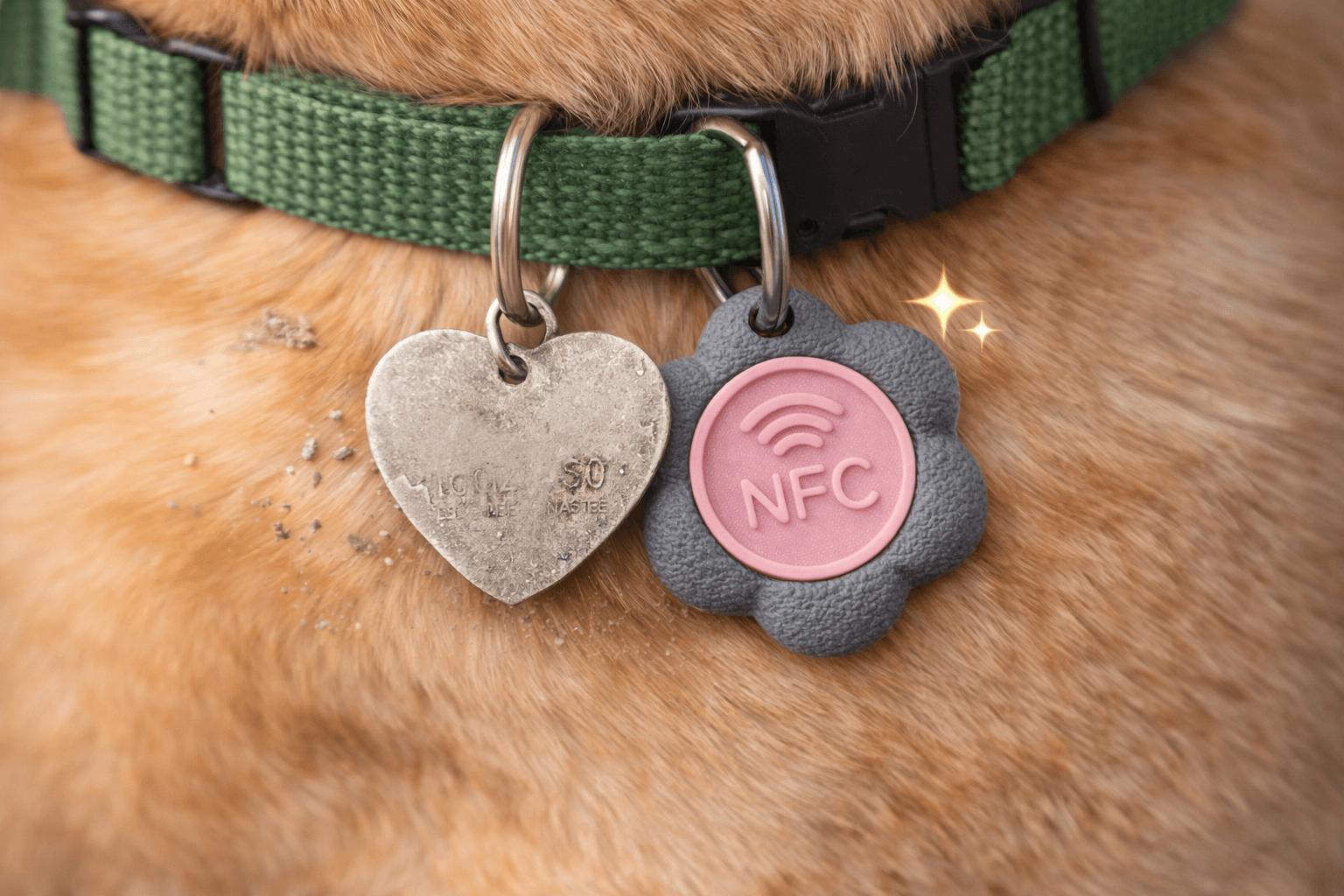
One more piece of summer prep: heat and excitement are exactly when dogs slip away. If yours ever bolts on a hot afternoon, every minute counts. A Bloomtag NFC tag makes recovery instant — whoever finds your dog simply taps the flower-shaped tag with any smartphone (no app required) and your contact page opens right away, with details you can update anytime.
The Bottom Line
Dog dehydration starts quietly but moves quickly, especially in summer. Learn the early signs, keep the skin-tent and gum tests in your back pocket, make water easy to reach, and don't hesitate to call your vet when something seems off.
Want your dog protected on every hot-weather adventure? Get a Bloomtag — $24.99 one-time, no subscription, free worldwide shipping. One tap with any phone, and whoever finds your dog reaches you in seconds.
This article was written with AI assistance and reviewed for accuracy against veterinary sources including the American Kennel Club and ASPCA. It is general information, not a substitute for professional veterinary advice — when in doubt, contact your veterinarian.