Camping with your dog is one of the best summer adventures you can share — long trails, campfire evenings, your dog snoozing next to you under the stars. But unfamiliar terrain, wildlife, and the freedom of a campsite mean a few extra risks too. A well-prepared owner can avoid almost all of them.
This guide walks through everything you need to know about camping with your dog in 2026: what to pack, how to keep your dog safe at the campsite, and what to do if they slip away in the woods.
Before You Go: Choose a Dog-Friendly Campsite
Not every campground welcomes dogs, and the rules vary widely. Some national parks restrict dogs to paved areas, while many state parks and private campgrounds are far more dog-friendly.
Before you book, check:
- Whether dogs are allowed on hiking trails (not just at the site)
- Leash requirements (most places require 6 ft or shorter)
- Quiet hours and barking policies
- Vaccination or paperwork requirements
- Distance to the nearest emergency vet
Search for "dog-friendly campgrounds near [your destination]" and read recent reviews. A site that allowed dogs five years ago may have changed its rules.
Pack the Right Gear for Your Dog
Camping pulls double duty for your dog — they're hiking, swimming, sleeping outside, and meeting wildlife. Pack accordingly:
- Sturdy collar or harness with current ID
- Long lead (15–30 ft) for relaxed time at the site
- Collapsible water bowl and extra fresh water
- Their normal food, plus an extra day's worth
- A flat sleeping pad or travel bed
- Tick remover, paw balm, and a basic first-aid kit
- A reflective collar light for after-dark bathroom trips
- Poop bags (yes, even in the woods)
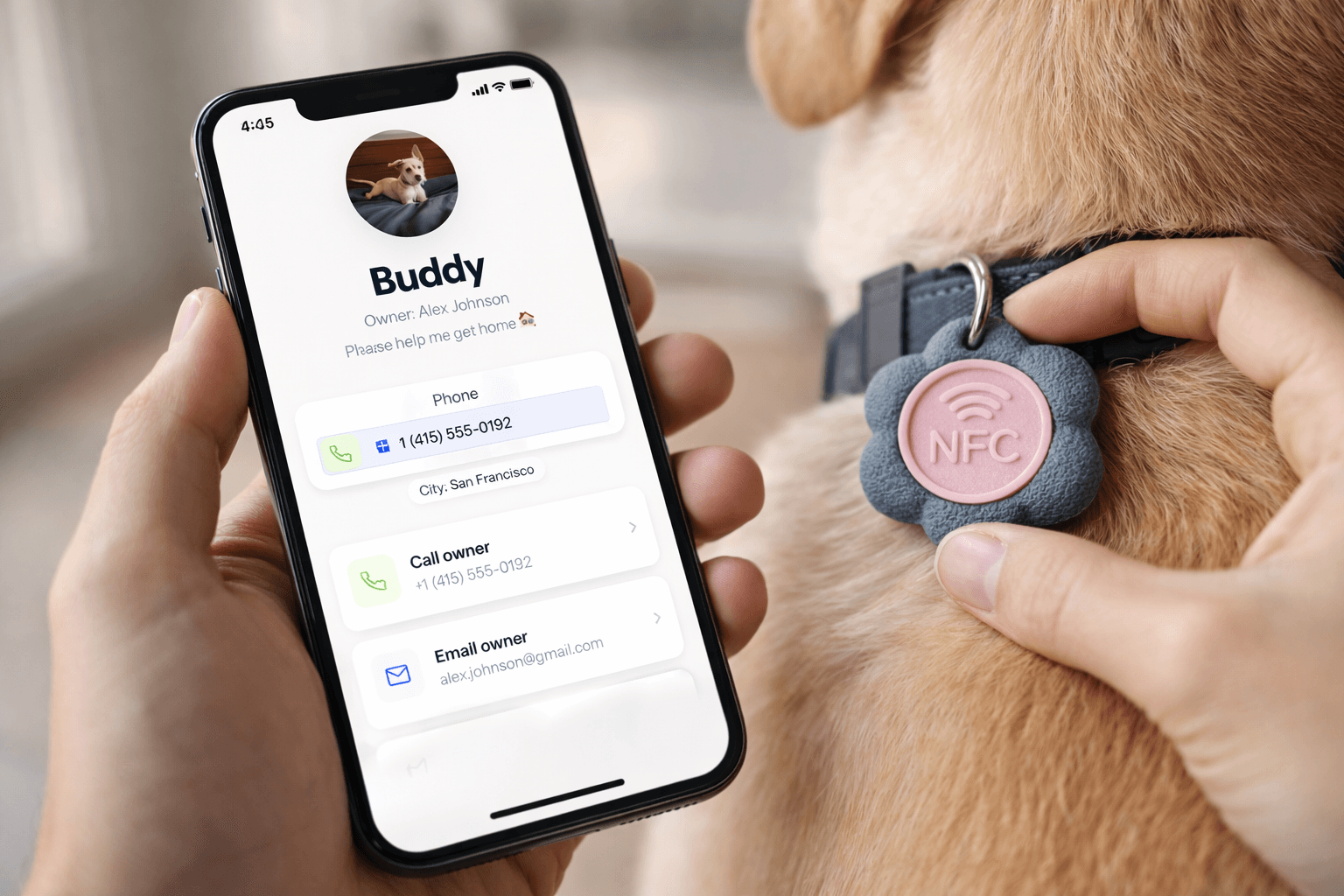
If your dog tends to wander or has selective hearing on adventures, a Bloomtag NFC pet tag is one of the most useful things you can clip on for a camping trip. If a stranger finds your dog miles from your campsite, they can tap the tag with their phone and instantly see your name, number, and any notes you've added — no app, no signup.
Campsite Safety Basics
Once you arrive, set your campsite up with your dog in mind. A few small adjustments make a huge difference.
Set up a "dog zone"
Use a long lead anchored to a stake or tree (never to the tent itself — dogs can collapse it). Choose a spot with shade, fresh water access, and a clear view of you. Avoid tying your dog where they could tangle around the fire pit, picnic table legs, or guy lines.
Manage the campfire carefully
Dogs are curious and don't understand "hot." Keep your dog at a safe distance from open flames, hot grills, and embers. After the fire dies down, the rocks stay scorching for hours — paws are easily burned. Sweep the area before letting your dog roam.
Watch the food
Bears, raccoons, and other dogs are all attracted to food scraps. Store dog food in sealed containers inside your car or a bear locker. Never leave a bowl of kibble out overnight.
Wildlife and Trail Hazards to Know
Even at a "tame" campsite, wildlife is everywhere. The most common camping hazards for dogs include:
- Snakes — give a wide berth to logs and rock piles, especially at dusk
- Porcupines, skunks, and raccoons — usually nocturnal, often curious
- Foxtails and burrs — check paws, ears, and underbelly daily
- Stagnant water — can carry giardia, blue-green algae, or leptospirosis
- Wild mushrooms — many are toxic; don't let your dog graze
Keep your dog leashed on trails unless you're certain it's allowed and your dog has a rock-solid recall. A startled deer or rabbit can pull a dog into miles of unfamiliar woods in seconds.
What to Do If Your Dog Goes Missing at a Campsite
Even careful owners lose dogs camping. Tents zip open, leashes break, fireworks or thunderstorms send a dog bolting. Speed matters more than anything else.
If your dog disappears:
- Stay at your campsite first — many dogs come back once they realize they're alone
- Alert nearby campers and the campground host immediately
- Walk the trails calling your dog by name, but don't chase them
- Leave familiar-smelling items (your worn t-shirt, their bed) at the site
- Post in local lost-pet groups and contact the nearest shelter
This is exactly the scenario where a modern ID tag earns its keep. A microchip only helps if your dog reaches a vet or shelter; an NFC tag means anyone with a smartphone can identify your dog on the spot. That difference can turn a multi-day search into a same-day reunion.
Make Camping Memorable, Not Stressful
A little planning turns camping with your dog from "nervous trip" into "best weekend of the summer." Pack smart, watch for hazards, leash up around wildlife, and make sure your dog's ID is current and easy to read by anyone who finds them.
Heading out soon? Grab a Bloomtag NFC pet tag before your trip — it's a one-time $24.99 (no subscription, ever), ships free worldwide, and updates anytime you change your number or campsite address. Five colors to match every collar, and tough enough to survive whatever the trail throws at it.