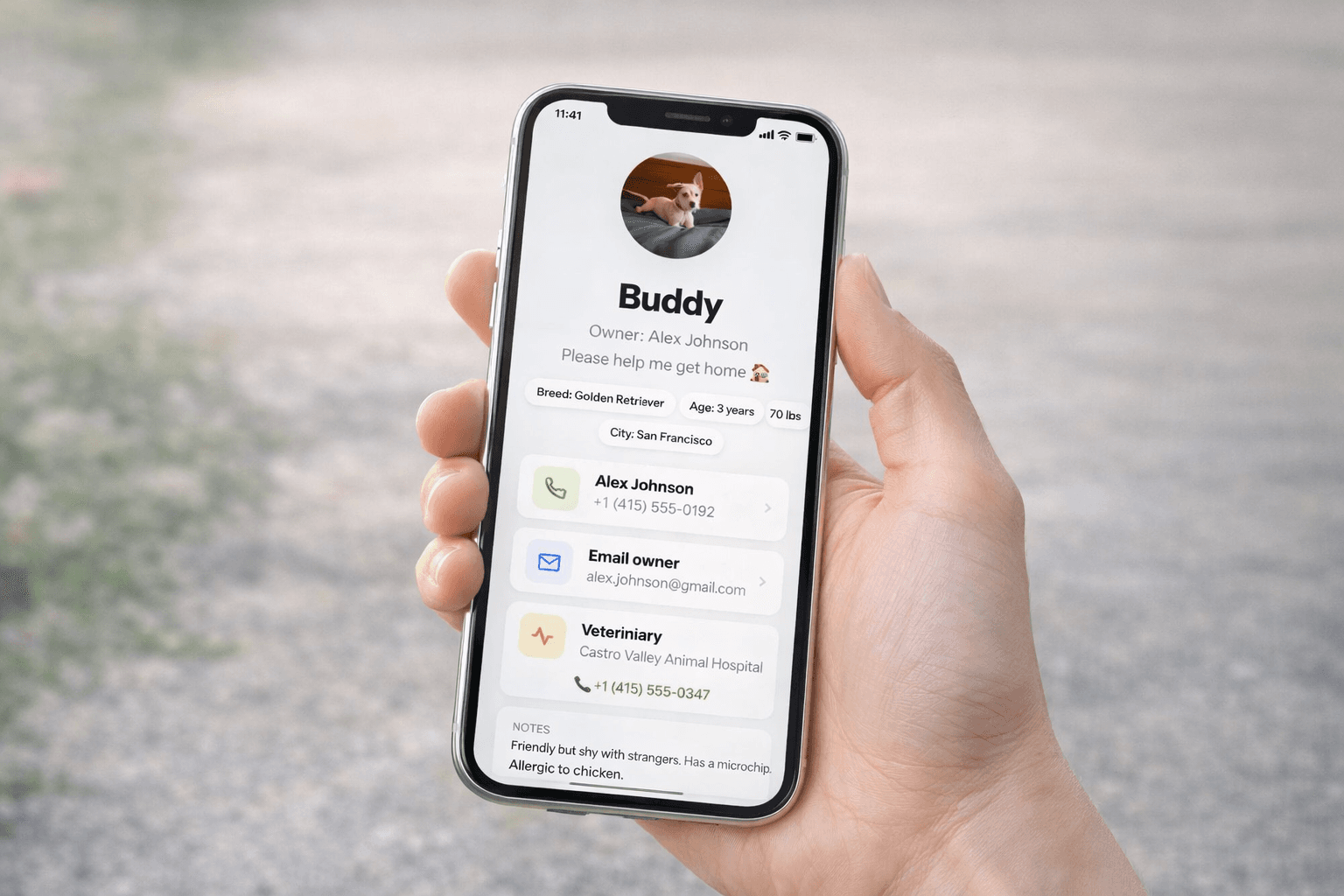
A dog ID tag is the single cheapest, most effective way to get a lost dog home. Microchips are great as a backup, but they require a scanner most people don't carry. A visible tag on your dog's collar is what actually gets a stranger to call you — and the right tag makes that process instant.
With so many options on the market in 2026, picking the best dog ID tag comes down to a few key factors: durability, readability, and how quickly someone can reach you. Here's a breakdown of every major type so you can make the right call.
Engraved Metal Tags: The Classic Choice
Stainless steel and brass tags have been the standard for decades, and for good reason. They're affordable (usually $5–$15), widely available, and most pet stores can engrave them on the spot.
The downsides? Engraving wears down over time, especially on softer metals like aluminium. If your dog is active or spends time outdoors, you may need to replace a metal tag every year or two. They also jingle — which some owners find charming and others find maddening at 3 a.m.
Best for: Budget-conscious owners who don't mind occasional replacement.
Silicone and Rubber Tags: Silent and Flexible
Silicone tags have surged in popularity thanks to brands like Besties Pets and QALO. They're completely silent, lightweight, waterproof, and almost indestructible. Most slide directly onto the collar rather than dangling from a ring, which means no jingling and less snagging.
The trade-off is limited space. Silicone tags typically hold a name and one phone number — not ideal if you want to include a second contact, your address, or medical info for your dog.
Best for: Dogs who swim, roughhouse, or whose owners value quiet.
QR Code Tags: More Info, One Extra Step
QR code tags link to an online profile where you can store as much detail as you want — multiple phone numbers, your vet's info, medications, even a photo. Updating your details is as easy as editing a webpage.
The catch is that the person who finds your dog needs to open their camera app, frame the QR code, and tap a link. It's a small ask, but it adds friction compared to simply reading a phone number. QR codes can also be tricky to scan if the tag is scratched, dirty, or hanging at an awkward angle.
Best for: Owners who want a detailed digital profile and don't mind the extra scan step.
NFC Smart Tags: Tap and Connect
NFC (Near Field Communication) tags are the newest category and arguably the most convenient. Instead of scanning a code, anyone with a smartphone simply taps or holds their phone near the tag — and the owner's contact page opens instantly. No app download, no camera aiming, no friction.
Products like Bloomtag use this approach with a design twist: the tag is shaped like a flower, so it doubles as a collar accessory. One tap pulls up the owner's contact details immediately, which shaves critical minutes off the time between "found dog" and "called owner." NFC tags also never wear down the way engraving does — the information lives digitally and can be updated anytime.
Best for: Owners who want the fastest possible path from found dog to phone call.
What to Look for in Any Dog ID Tag
No matter which type you choose, keep these factors in mind:
- Waterproofing. Your dog will get wet. A tag that rusts, peels, or becomes unreadable after a few rainstorms isn't doing its job.
- Legibility at a glance. If a stranger picks up your dog, they shouldn't need to squint, decode, or download anything to reach you.
- Secure attachment. A tag that falls off is useless. Look for reinforced split rings or slide-on designs that stay locked to the collar.
- Updatable information. Moved recently? Changed your number? Digital tags (QR and NFC) let you update details without buying a new tag.
Don't Rely on Just One Method
The smartest approach is layering your dog's identification. A visible tag handles the 90% scenario — a kind stranger spots your dog and wants to help. A microchip handles the other 10%, where a tag is lost or a dog ends up at a shelter with a scanner.
Whichever tag you choose, the most important thing is that your dog is actually wearing one. A 2024 ASPCA study found that dogs with visible ID tags are returned to their owners up to five times faster than dogs without them. That's not a stat you want to gamble with.
Pick a tag that fits your dog's lifestyle, make sure the info is current, and clip it on today. If you want the fastest, no-friction option, check out Bloomtag — one tap from any smartphone and your contact page is already open.